RTM Regulations
What is Remote Therapeutic Monitoring?
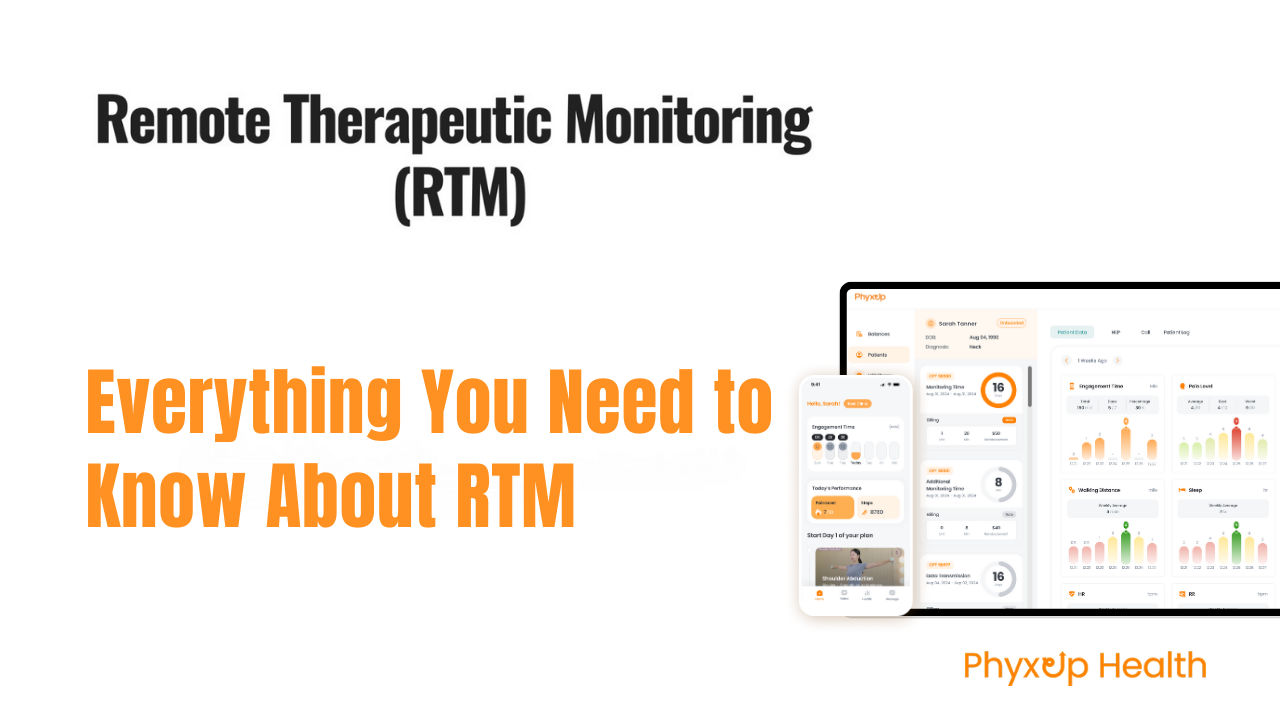
In 2022, CMS introduced new CPT codes for Remote Therapeutic Monitoring (RTM), allowing providers to deliver and bill for remote care services.
RTM enables providers to monitor patient progress between in-person visits using web and mobile platforms. Providers can collect key non-physiological data such as pain levels, mobility, and treatment adherence, giving them ongoing insight into patient status and helping improve care decisions.
Billing for RTM
For many physical therapy clinics, RTM can feel complex and difficult to implement. RTM billing includes detailed requirements that are often time-consuming and challenging to manage internally.
When delivered through a value-based care platform like PhyxUp Health, RTM becomes a powerful tool for both patients and providers. PhyxUp Health manages the entire RTM workflow from patient onboarding through monitoring and billing so clinics can focus on delivering care.
To successfully bill for RTM services and avoid denials, providers should keep the following key considerations in mind:
- CMS regulations for RTM CPT codes (98975, 98977, 98979, 98985, 98980, 98981)
- Patient insurance coverage and eligibility for RTM services
- RTM billing cycle and submission timelines
- Monitoring time requirements and regulations for therapists